
Search
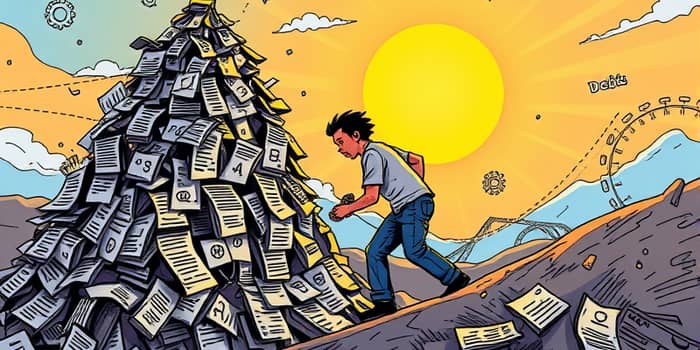
Debt can feel like a relentless weight, pressing down on dreams and goals. Yet with the right approach, you can transform that burden into a manageable challenge.
In this comprehensive guide, we explore how to take control, design personalized strategies, and emerge debt-free with confidence and clarity.
In 2025, reducing debt ranks as Americans’ No. 1 financial priority, with 42% placing it above saving for large purchases or retirement. Meanwhile, the U.S. national debt hovers around $37 trillion, reflecting both systemic pressures and individual struggles.
High interest rates make carrying balances more expensive, and consumer debt remains elevated. By strategically reducing your burden, you not only free up mental space, you also save thousands in interest, reclaim financial freedom, and create a stable foundation for your future.
Before crafting any strategy, conduct a complete inventory of debts and APRs. You can’t minimize what you don’t measure.
Documenting these details reveals your “toxic” debts—those with high APR and heavy fees—versus more benign obligations like low-rate mortgages. This audit is the foundation for choosing the most effective payoff path.
Two primary methods dominate the conversation: the snowball and the avalanche. Both accelerate progress beyond mere minimum payments, but each serves different priorities.
Snowball Method: Pay minimums on all accounts, then funnel extra funds to the smallest balance first. Once paid, roll that payment into the next-smallest balance, creating momentum and a steady stream of “wins.” This approach offers a psychological boost that helps habit-forming, ideal for those needing early motivation.
Avalanche Method: Pay minimums on all debts, then direct surplus money to the highest-interest obligation. After eliminating it, move to the next-highest APR, and so on. This system is mathematically optimal for reducing interest cost and often shortens payoff time.
Consider a hybrid: start with one or two quick snowball wins to build confidence, then switch to avalanche to maximize savings. The best method is the one you commit to and maintain consistently.
Beyond payoff frameworks, you can engineer the shape of your debt using consolidation and balance transfers to lower costs and simplify payments.
For consolidation: ensure the new APR is meaningfully lower than the weighted average of your current debts. Commit to avoiding new charges on old accounts to prevent doubling your obligations. For balance transfers: calculate transfer fees versus interest saved and set a clear payoff schedule before the promotional period ends.
Strategy alone won’t guarantee success. Strengthen your plan with robust budgeting, income optimization, and protective measures.
With these safeguards, you maintain momentum, protect your credit score, and prevent setbacks when unexpected expenses arise.
Some last-resort strategies can exacerbate your burden. Family loans without clear terms can strain relationships; payday loans and title loans carry sky-high APRs. Reserve these options for true emergencies, and exit them as soon as possible.
Another common trap: recharging paid-off cards after consolidating. Closing them can sometimes harm your credit utilization ratio; instead, leave them open with a zero balance, but store the cards out of sight until you’re debt-free.
Debt minimization is more than a numeric exercise. It’s a transformative journey that blends strategy, structure, and self-discipline. By following these steps—assess, choose a framework, reengineer your obligations, and shore up your behavior—you’re not just paying off debts; you’re reclaiming your autonomy.
Envision the day when your balances reach zero. Feel the relief, the freedom, and the pride in your resilience. Let this guide be your blueprint for that moment. Embrace the process, celebrate each milestone, and step forward into a future unburdened by debt.
References