
Search
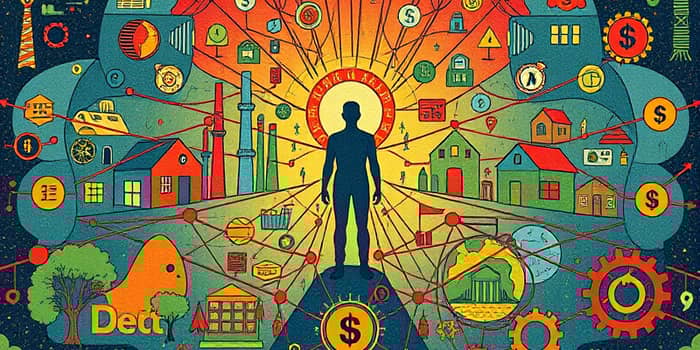
Debt is often seen as a series of isolated obligations. In reality, it exists within a dynamic web where individual choices, institutional frameworks, technological tools, and planetary limits all converge.
A interconnected network of financial actors anchors every loan, bond, or credit line. This ecosystem spans multiple layers:
At its core lie borrowers and lenders operating together, supported by intermediaries like payment systems, rating agencies, and credit bureaus. Laws, social norms, and evolving technologies guide their behavior, while broader factors such as labor markets, inflation, and climate dynamics shape outcomes.
Understanding these relationships is essential because any change—be it a regulatory update, an AI underwriting algorithm, or a shock in energy prices—sends ripples throughout the entire structure. We can observe this ecosystem at three scales:
At the micro level, each household builds a unique “debt stack” reflecting its financial journey. Common categories include:
Several forces drive this indebtedness:
These elements create feedback loops: higher balances increase minimum payments, squeezing savings and amplifying vulnerability to future shocks. Missed payments trigger fees and credit damage, forcing borrowers toward higher-cost options. In contrast, a healthy personal debt ecosystem features manageable debt-to-income ratios, emergency reserves, and transparent repayment plans.
Lenders and collection agencies form their own recovery ecosystems. This involves employees (agents, risk managers), technology (AI analytics, digital channels), processes (segmentation, hardship programs), and customer behaviors. Such systems operate within broader contexts of unemployment rates, inflation, and regulation.
Resilience here means the capacity to bounce back from adversity. The COVID-19 crisis revealed weaknesses: sudden non-performing loan spikes, reliance on physical contact, and regulatory forbearance needs. Future shocks—rising energy prices, workforce disruptions, and higher interest rates—will test these systems again.
Institutions are moving from punitive tactics toward empathy-driven models. By segmenting customers based on payment behavior and default probability, a retail bank with over 150,000 monthly cases improved prioritization, lift in revenue and reduced charge-offs. Low-risk borrowers received streamlined digital reminders, while higher-risk segments accessed personalized restructuring offers.
Sovereign and corporate debts form another layer. Public borrowing finances infrastructure and social programs but also affects international capital flows and exchange rates. When countries overcommit, they face procyclical tightening: defaults rise as risk appetites shrink, deepening recessions.
Traditional debt sustainability metrics focus on fiscal balances and foreign reserves. Yet an expanded view must integrate ecological parameters. Nations draw on natural resources to meet obligations, embedding environmental costs in their financial statements.
Beyond monetary commitments, humanity carries an emerging ecological debt. This concept measures the accumulated pressure on Earth’s regenerative capacity, encompassing resource depletion, pollution accumulation, and carbon overshoot.
This debt is unevenly distributed: industrialized nations have historically overused resources, creating environmental injustices that burden developing countries and future generations. Adding ecological debt to national balance sheets reveals hidden risks and systemic connections and highlights the need for long-term financial resilience and sustainability.
Moreover, “ecosystem service debt” warns of tipping points. Species extinction debts and declining pollination or water regulation services can collapse human well-being without recent shocks. Our financial systems are nested within these biophysical thresholds, and ignoring them mis-prices a slow-moving but monumental risk.
Empowerment begins with awareness. Mapping your personal debt ecosystem means knowing your debt-to-income ratio, interest rate exposures, and potential weak points. Building buffers—emergency savings, diversified income streams, and clear repayment roadmaps—helps you adapt.
Engage with lenders proactively. Many institutions now offer digital tools and hardship programs designed to support borrowers in distress. Transparency and honest dialogue can unlock better terms and foster trust.
At the community level, advocate for financial literacy, fair regulation, and sustainable lending practices. Recognize that personal outcomes reflect broader system designs: pushing for managing your debt proactively and strategically contributes to healthier macroeconomic and ecological conditions.
Ultimately, debt is not merely a burden to bear but a lens to view the interplay of human ambition, institutional power, and planetary limits. By understanding and engaging with your debt ecosystem, you become an active participant in shaping a more resilient, equitable, and sustainable financial future.
References